About Image:
The Story Behind the Shot:
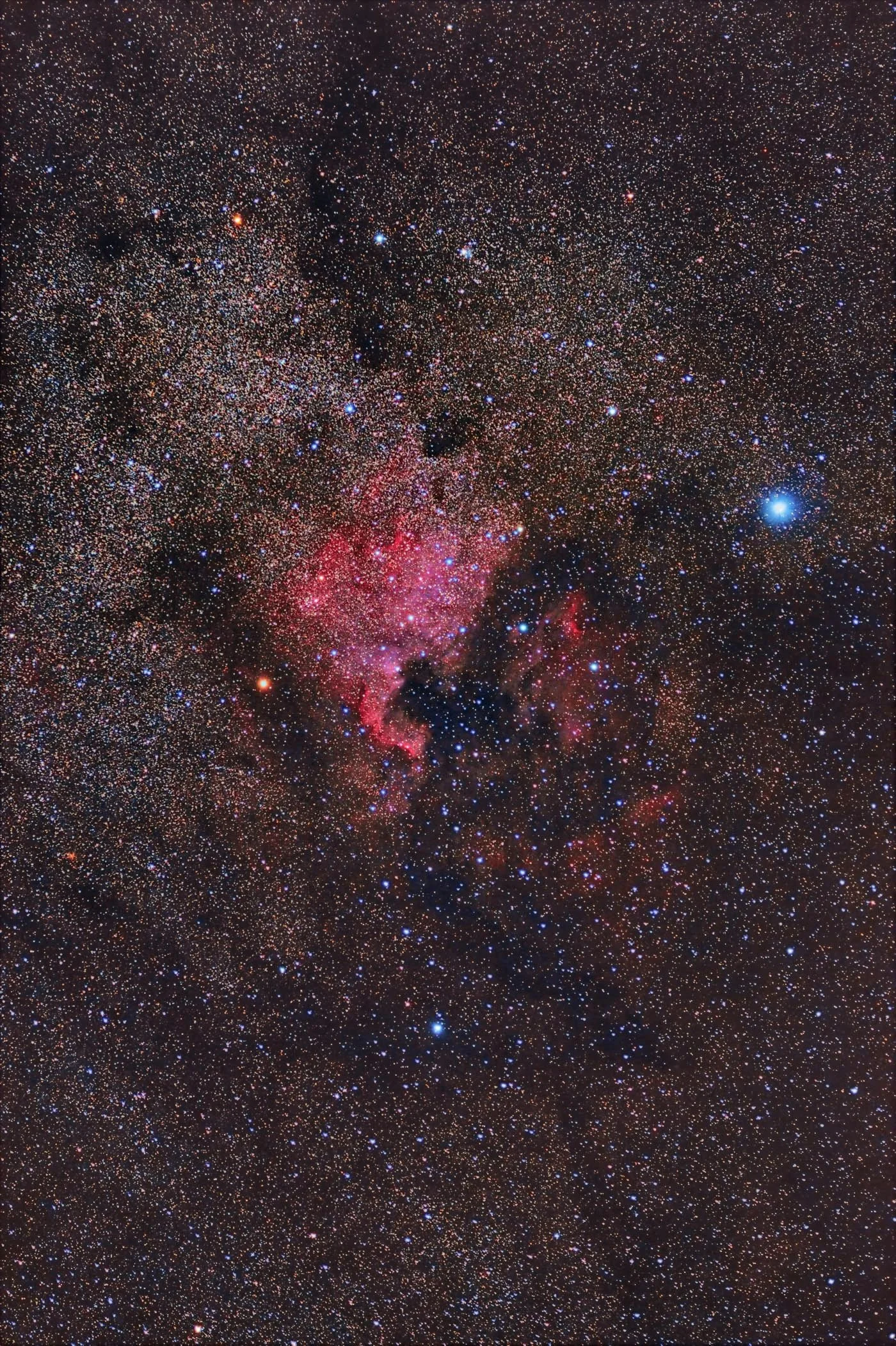
In 2018, disaster struck when my main telescope's corrector plate shattered. Refusing to quit, I used backyard grit to keep shooting. I cobbled together a piggyback rig, mounting my Canon 60D with a 300mm Sigma camera lens side-by-side with my Orion StarShoot autoguider on a single dovetail bar.
I thought the raw data for this shot was lost to time. However, I recently dug through my old email outbox from when I submitted images to astronomy magazines and recovered the file! Back in 2018, I didn't have the processing tools I have today. I decided to pull this historic file into PixInsight and Photoshop to completely reprocess it from scratch using my modern AI tools.
The 2026 Reprocessing Breakthrough:
The difference is night and day. Running BlurXTerminator tightened up the tracking on the camera lens and sharpened the iconic "Cygnus Wall" gas structure. StarXTerminator allowed me to completely separate the dense Milky Way background field, giving me the freedom to clean up the baseline DSLR noise floor with NoiseXTerminator without blurring the targets. Finally, an SPCC pass mathematically wiped out the old color casts, turning a 2018 workaround into a modern, crisp showcase piece.
North American / Pelican Nebula
Here was the setup
Equipment & Details:
Optics: 300mm Sigma lens
Camera: Canon 60D DSLR unmoddified
Mount: Celestron AVX
Guiding: Orion starshoot autoguider with 60mm guide scope
Date: September 2-2019
Location: Clarksdale Missouri
Exposures: Lights-12, 5 minute subs ISO-1000, 1 Hour
Processing: Pixlnsight, Photoshop CS5